
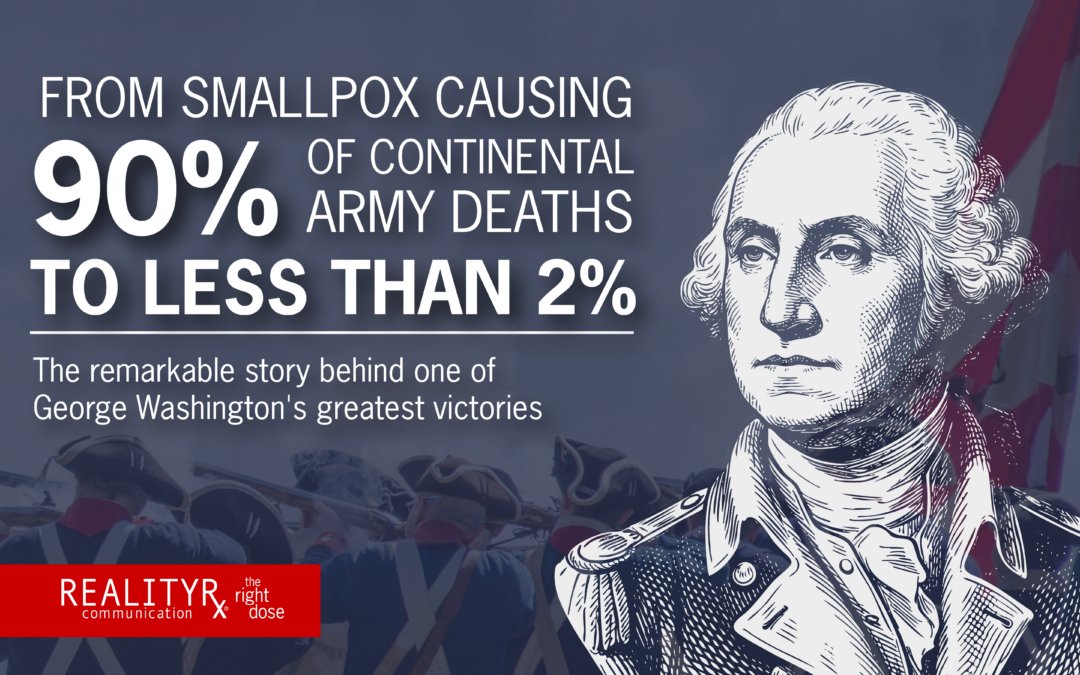
As we celebrate America’s 250th Anniversary, a critical piece of Revolutionary War history remains little-known: smallpox was the biggest enemy of the Continental Army, causing roughly 90% of deaths early in the war, until George Washington fought back – and turned the tide.
The British Advantage
The variola virus (the virus that causes smallpox) was brought to the Americas by European explorers and settlers. Smallpox is one of the deadliest infectious diseases in human history, killing an estimated 300-500 million people.
Because it was so common in Great Britain, the majority of British soldiers had already been exposed as children. Anyone who survived childhood smallpox carried a lifelong immunity to it into adulthood – and onto the battlefield.
In comparison, most Continental soldiers grew up on rural farms with little exposure to other people. As a result, less than 25% of American recruits had been exposed to smallpox before joining the army, leaving them vulnerable to outbreaks when living in crowded military camps.
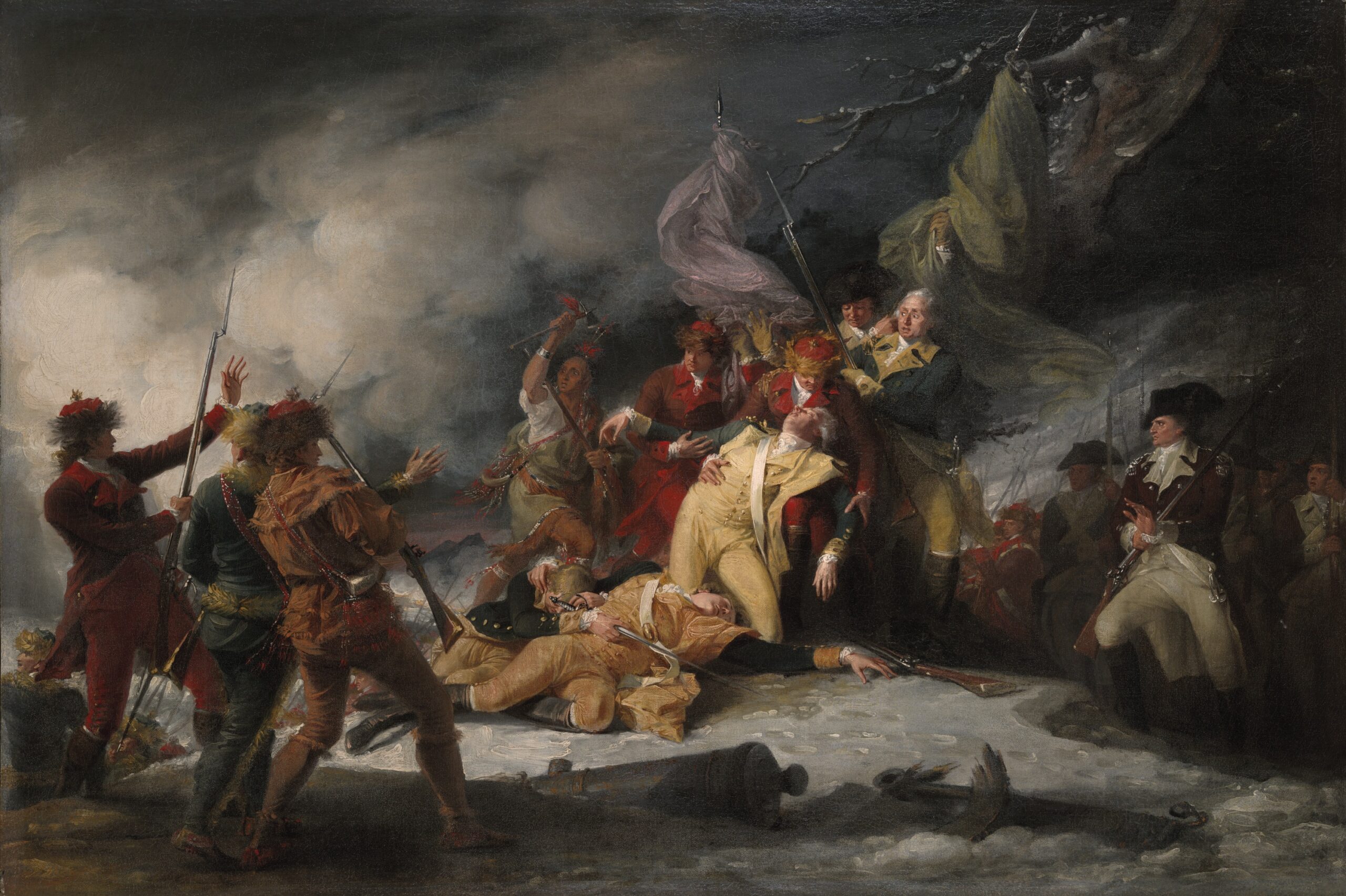
The Death of General Montgomery in the Attack on Quebec, December 31, 1775 by John Trumbull (1786). Yale University Art Gallery, New Haven.
Washington Takes Charge

“[Smallpox: Instruments for inoculation and developing pustule],” National Library of Medicine
With the death rate as high as 30%, smallpox was more dangerous to the Continental Army than the British troops. It also made soldiers sick and unable to fight and created much fear and anxiety. In the winter of 1777, Washington mandated that all his men be inoculated, an act that literally changed the course of the Revolutionary War.
This engraving depicts a developing smallpox pustule (figures 1 – 7), and the tools used for inoculation (figures 8 – 9).
The Continental Army at Full Strength
By the end of 1777, nearly 40,000 soldiers had been inoculated and the death rate from smallpox plummeted to less than 2%. If Washington had not mandated inoculation, statistical modeling suggests that 6,000 – 12,000 of his 40,000 troops would have died, and thousands more would have been left permanently blinded or physically incapacitated. This medical victory stabilized troop levels, vastly increased moral and led to a surge of new recruits that kept the Revolution going strong.
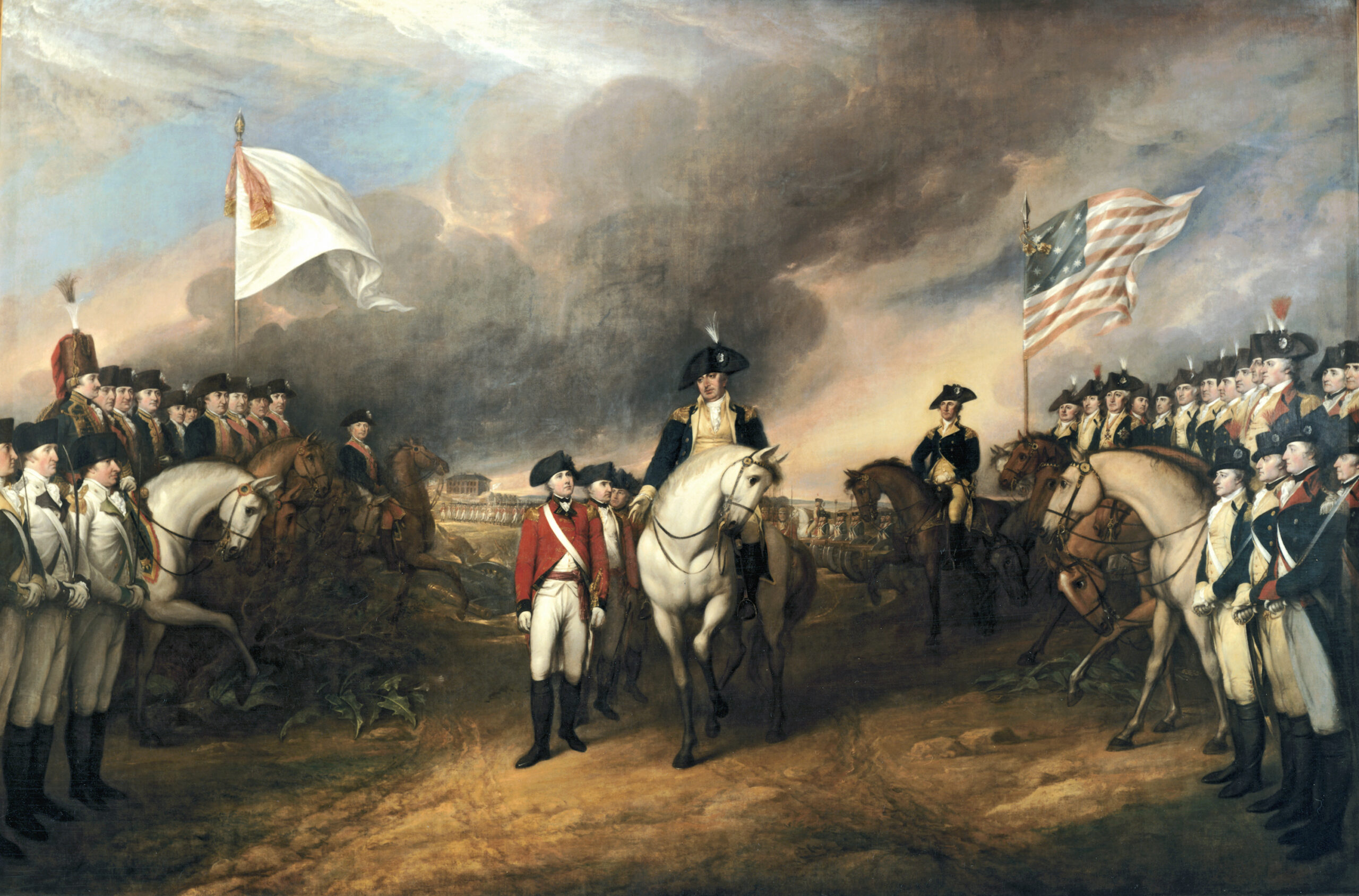
Surrender of Lord Cornwallis by John Trumbull (1820), United States Capitol Rotunda, Washington, D.C.
REALITYRx specializes in healthcare marketing and has extensive experience creating digital marketing campaigns for both consumers and healthcare professionals. See examples of our client work here. What can we do for you? Let’s start a conversation.
As we celebrate America’s 250th Anniversary, a critical piece of Revolutionary War history remains little-known: smallpox was the biggest enemy of the Continental Army, causing roughly 90% of deaths early in the war, until George Washington fought back – and turned the tide.
The British Advantage
The variola virus (the virus that causes smallpox) was brought to the Americas by European explorers and settlers. Smallpox is one of the deadliest infectious diseases in human history, killing an estimated 300-500 million people.
Because it was so common in Great Britain, the majority of British soldiers had already been exposed as children. Anyone who survived childhood smallpox carried a lifelong immunity to it into adulthood – and onto the battlefield.
In comparison, most Continental soldiers grew up on rural farms with little exposure to other people. As a result, less than 25% of American recruits had been exposed to smallpox before joining the army, leaving them vulnerable to outbreaks when living in crowded military camps.
The Death of General Montgomery in the Attack on Quebec, December 31, 1775 by John Trumbull (1786). Yale University Art Gallery, New Haven.
Washington Takes Charge
With the death rate as high as 30%, smallpox was more dangerous to the Continental Army than the British troops. It also made soldiers sick and unable to fight and created much fear and anxiety. In the winter of 1777, Washington mandated that all his men be inoculated, an act that literally changed the course of the Revolutionary War.
This engraving depicts a developing smallpox pustule (figures 1 – 7), and the tools used for inoculation (figures 8 – 9).
“[Smallpox: Instruments for inoculation and developing pustule],” National Library of Medicine
The Continental Army at Full Strength
By the end of 1777, nearly 40,000 soldiers had been inoculated and the death rate from smallpox plummeted to less than 2%. If Washington had not mandated inoculation, statistical modeling suggests that 6,000 – 12,000 of his 40,000 troops would have died, and thousands more would have been left permanently blinded or physically incapacitated. This medical victory stabilized troop levels, vastly increased moral and led to a surge of new recruits that kept the Revolution going strong.
Surrender of Lord Cornwallis by John Trumbull (1820), United States Capitol Rotunda, Washington, D.C.
REALITYRx specializes in healthcare marketing and has extensive experience creating digital marketing campaigns for both consumers and healthcare professionals. See examples of our client work here. What can we do for you? Let’s start a conversation.
