
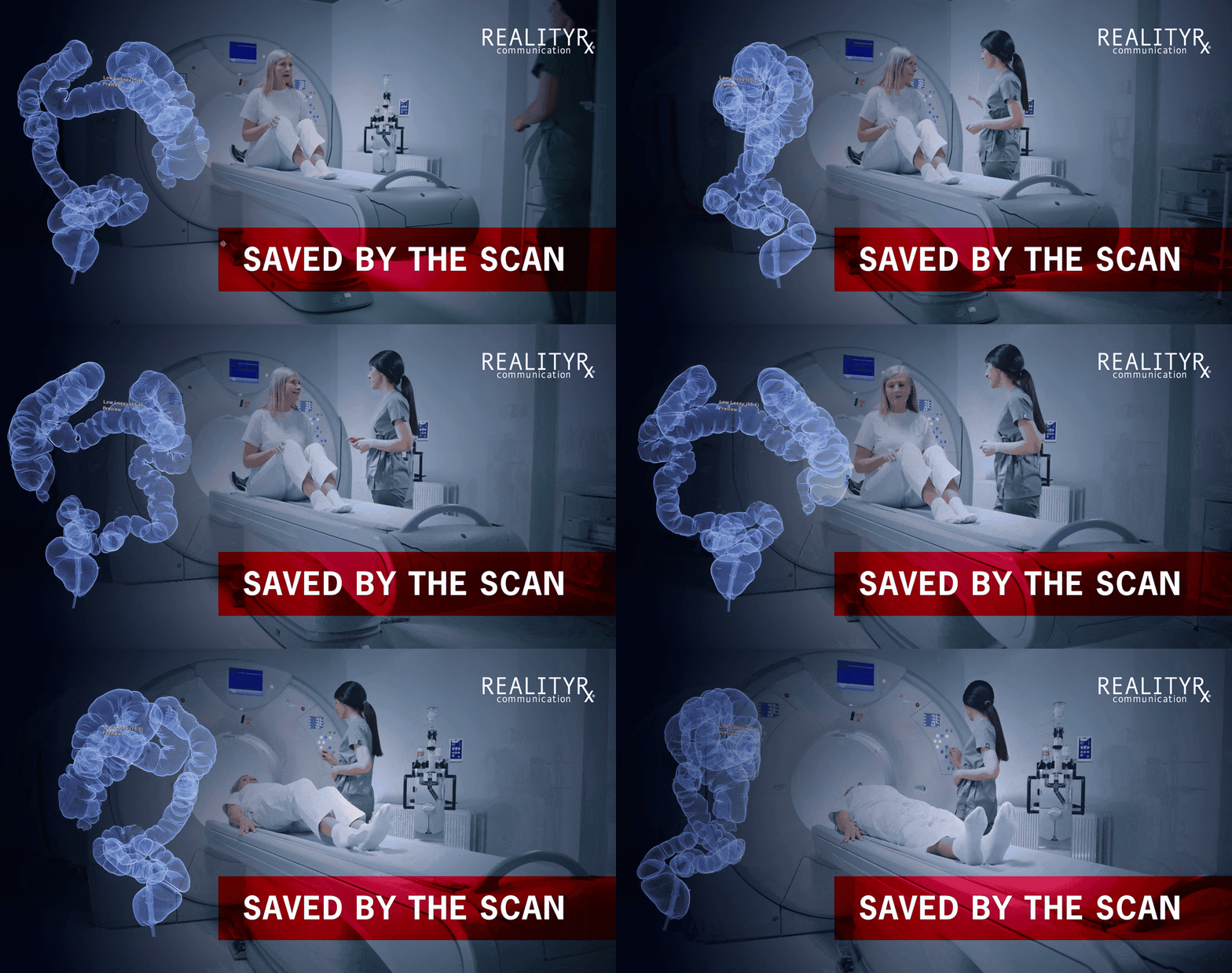
Do you know about Virtual Colonoscopy?


Be aware that some referring physicians are unfamiliar with Virtual Colonoscopy and may not know where to send their patients to get one. Before speaking with your doctor, visit myvirtualcolonoscopy.com for more information, statistics, and links to related sites (like the American College of Radiology, where you can find a Virtual Colonoscopy screening location near you). The site also provides a helpful tool to facilitate the discussion with your doctor about Virtual Colonoscopy.

myvirtualcolonoscopy.com for patients

braccovirtualcolonoscopy.com for HCPs
A companion website, braccovirtualcolonoscopy.com, offers resources, education, and KOL videos for imaging professionals. Both sites were created by REALITYRx for Bracco Diagnostics Inc. REALITYRx specializes in healthcare marketing and has extensive experience creating digital marketing campaigns for both consumers and healthcare professionals. See examples of our client work here. What can we do for you? Let’s start a conversation.
- American Cancer Society. People Ages 45-49 Are Not Getting Screened for Colorectal Cancer. Accessed Aug 5, 2025. https://www.cancer.org/ research/acs-research-highlights/colon-and-rectal-cancer-research-highlights/screening—early-detection-colorectal-cancer-studies/people-45-49-not-getting-screened-for-colorectal-cancer.html.
- American Cancer Society. Cancer Facts and Figures 2025. https://www.cancer.org/content/dam/cancer-org/research/cancer-facts-and-statistics/ annual-cancer-facts-and-figures/2025/2025-cancer-facts-and-figures-acs.pdf.
- Lin JS, Piper MA, Perdue LA, et al. Screening for colorectal cancer: Updated evidence report and systematic review for the US Preventative Services Task Force. JAMA.2016;315(23):2576-2594.
- Imperiale TF, Ransohoff DF, Itzkowitz SH, et al. Multitarget stool DNA testing for colorectal-cancer screening. N Engl Med.2014;370:1287-1297.
- Rex DK, Boland,CR, Dominitz JA, et al. Colorectal Cancer Screening: Recommendations for Physicians and Patients from the US Multi-Society Task Force on Colorectal Cancer. Am J Gastroenterol.2017; 112:1016–1030.
- American College of Radiology (ACR) Virtual Colonoscopy (CT Colonography) patient brochure, 2025. https://edge.sitecorecloud.io/ americancoldf5f-acrorgf92a-productioncb02-3650/media/ACR/Files/Clinical/Colon-Cancer-Screening/CT-Colonography-Patient-Brochure.pdf.
- American Cancer Society. People Ages 45-49 Are Not Getting Screened for Colorectal Cancer. Accessed Aug 5, 2025. https://www.cancer.org/ research/acs-research-highlights/colon-and-rectal-cancer-research-highlights/screening—early-detection-colorectal-cancer-studies/people-45-49-not-getting-screened-for-colorectal-cancer.html.
Do you know about Virtual Colonoscopy?

American Cancer Society
The advantages of Virtual Colonoscopy include a faster procedure (about 15 minutes for the scan and no recovery period needed) compared with optical colonoscopy (30-60 minutes). It is also less costly, and Virtual Colonoscopy is covered by most insurance plans and by Medicare.
Be aware that some referring physicians are unfamiliar with Virtual Colonoscopy and may not know where to send their patients to get one. Before speaking with your doctor, visit myvirtualcolonoscopy.com for more information, statistics and links to related sites (like the American College of Radiology, where you can find a Virtual Colonoscopy screening location near you). The site also provides a helpful tool to facilitate the discussion with your doctor about Virtual Colonoscopy.

myvirtualcolonoscopy.com for patients

braccovirtualcolonoscopy.com for HCPs
A companion website, braccovirtualcolonoscopy.com, offers resources, education and KOL videos for imaging professionals. Both sites were created by REALITYRx for Bracco Diagnostics Inc. REALITYRx specializes in healthcare marketing and has extensive experience creating digital marketing campaigns for both consumers and healthcare professionals. See examples of our client work here. What can we do for you? Let’s start a conversation.
- American Cancer Society. People Ages 45-49 Are Not Getting Screened for Colorectal Cancer. Accessed Aug 5, 2025. https://www.cancer.org/ research/acs-research-highlights/colon-and-rectal-cancer-research-highlights/screening—early-detection-colorectal-cancer-studies/people-45-49-not-getting-screened-for-colorectal-cancer.html.
- American Cancer Society. Cancer Facts and Figures 2025. https://www.cancer.org/content/dam/cancer-org/research/cancer-facts-and-statistics/ annual-cancer-facts-and-figures/2025/2025-cancer-facts-and-figures-acs.pdf.
- Lin JS, Piper MA, Perdue LA, et al. Screening for colorectal cancer: Updated evidence report and systematic review for the US Preventative Services Task Force. JAMA.2016;315(23):2576-2594.
- Imperiale TF, Ransohoff DF, Itzkowitz SH, et al. Multitarget stool DNA testing for colorectal-cancer screening. N Engl Med.2014;370:1287-1297.
- Rex DK, Boland,CR, Dominitz JA, et al. Colorectal Cancer Screening: Recommendations for Physicians and Patients from the US Multi-Society Task Force on Colorectal Cancer. Am J Gastroenterol.2017; 112:1016–1030.
- American College of Radiology (ACR) Virtual Colonoscopy (CT Colonography) patient brochure, 2025. https://edge.sitecorecloud.io/ americancoldf5f-acrorgf92a-productioncb02-3650/media/ACR/Files/Clinical/Colon-Cancer-Screening/CT-Colonography-Patient-Brochure.pdf.
- American Cancer Society. People Ages 45-49 Are Not Getting Screened for Colorectal Cancer. Accessed Aug 5, 2025. https://www.cancer.org/ research/acs-research-highlights/colon-and-rectal-cancer-research-highlights/screening—early-detection-colorectal-cancer-studies/people-45-49-not-getting-screened-for-colorectal-cancer.html.
